

Two Futures, One Campus: How Supporting Student Parents and Their Children Creates Lasting Change
Balancing coursework, employment, and caregiving, parenting students bring unmatched potential to their college, community, and career. One in five undergraduate students is a parent, and 74% of them are women. Without a support system to fall back on, many student parents are forced to drop out of college due to limited and unaffordable child care options.
Through partnerships with Kids on Campus, parenting students receive more than child care and quality education for their young children. They find support, strength, and leadership opportunities at Head Start programs housed on community college campuses.
How do community colleges benefit from having Head Start on campus? Not only does having a center on campus help students stay enrolled, but the appeal of one can result in increased enrollment numbers of new students and staff. If an existing child care center is in operation on campus, Head Start can serve as an expert partner while reducing the college’s budgetary or managerial burden.
Palo Alto College and AVANCE - San Antonio in San Antonio, Texas, and Howard Community College and the Community Action Council of Howard County in Columbia, Maryland, are two examples of partnerships where parenting students and their children can fully commit to their education.
Three student parents shared their stories about how having a Head Start center on their campus allowed them to be an example to their children, pursue their dreams, and ensure their children receive high-quality education and care.
Critical support for every parent and child
Cristina Medina is an AVANCE - San Antonio parent and President of the Policy Council at Palo Alto College’s Ray Ellison Family Center. She’s in a program for early childhood education and is also working to become a nail technician. At first, she found it difficult to juggle attending classes at Palo Alto Community College with her work schedule and kids’ pick-up and drop-off times.
“Before I found the Head Start on my college campus, it was extremely difficult. I didn’t know where to start or look. I was on the edge of mentally and emotionally giving up because being a full-time mom while going to school and work was hard with no support.”
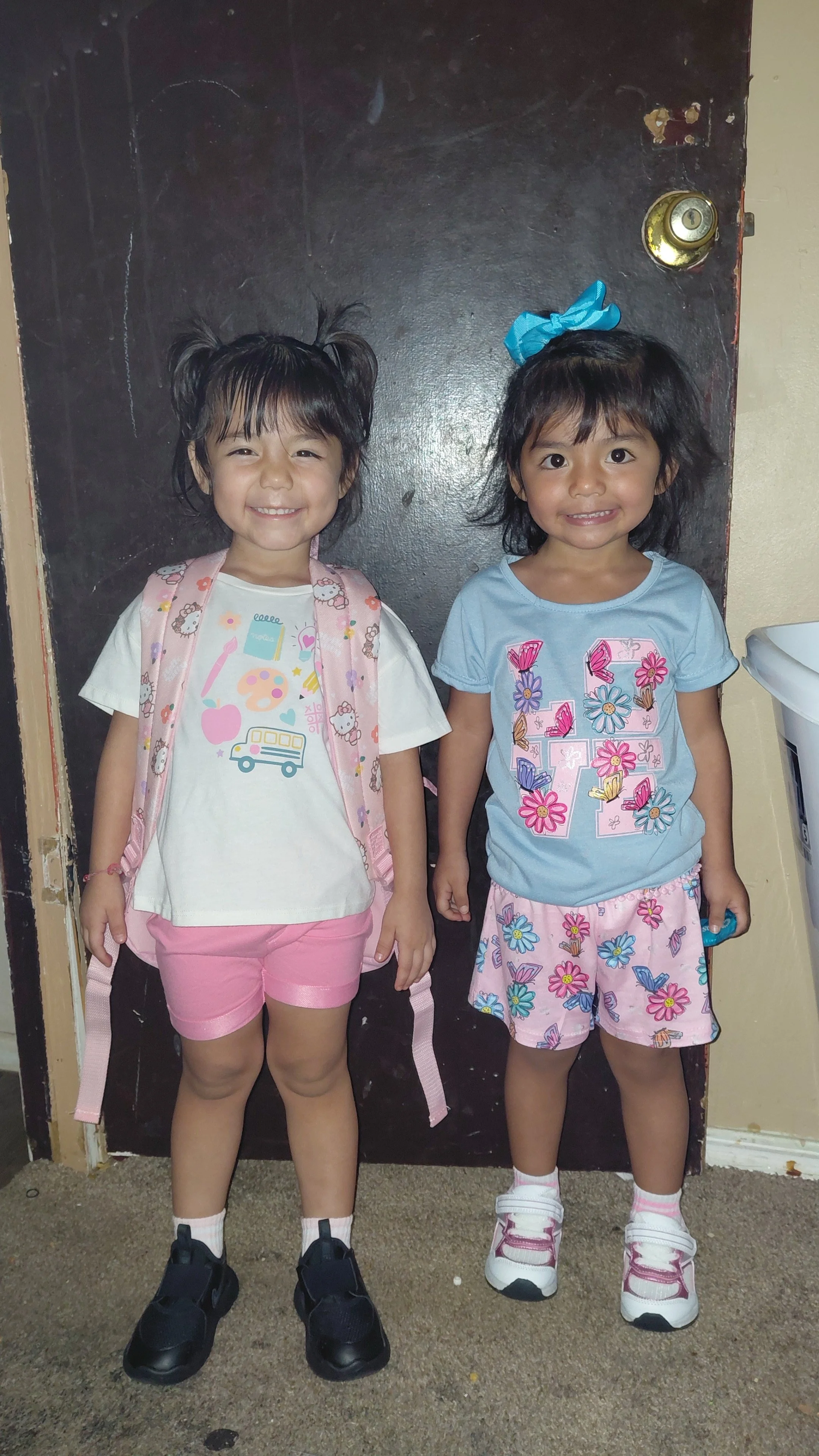
Cristina Medina's children Lucero (left) and Crisella (right)
She said the team at AVANCE - San Antonio helped her find a substitute teacher role at a school that aligned perfectly with her kids' schedules. The team also shared other resources for student parents, including food assistance programs, AVANCE - San Antonio’s flagship dual-generation Parent-Child Education Program, utility payment support, and free clothing for children.
Beyond resource support, the teachers at AVANCE - San Antonio taught her two young children invaluable skills as well. Prior to attending AVANCE, her youngest daughter struggled with speech and physical development. Because of Head Start’s Early Childhood Intervention Support, Medina said her speech and language skills have improved significantly. Her older daughter is also a year ahead in school, excelling in bilingual classes in Kindergarten.
Medina said that when she graduates on January 10, she hopes to become an educator herself. “I want to become a full-time teacher and give back to my community in the same way that it helped me.”
Leadership opportunities and community-building
At Howard Community College (HCC) in Columbia, Maryland, Titilola Tanimowo finds purpose and is a strong leader for other student parents. Originally from Nigeria, she held a BSC degree in Geography, but had to start over when she came to America. She pursued her passions in an entrepreneurship program where she learned how to plan corporate events, weddings, and birthdays. She’s taken courses in business, marketing, and social media, and now owns a business where she can put her skills to work.
“For me, education never ends. You have to keep learning and evolving while finding a balance, especially when you have a family,” said Tanimowo.

Titilola Tanimowo and her children.
Tanimowo is the Community Action Council of Howard County (CAC), Head Start Policy Council Chair. As Policy Council Chair, she supports and empowers fellow parents by helping them set personal goals, develops and oversees center budgets, determines the resources children need to succeed, and collaborates with other committee members to raise funds for the center.
“Head Start is giving me and the other parents an opportunity to be in school,” she said, “It’s helping parents that are not able to afford child care.”
Tanimowo said the support she’s received from the partnership between HCC and CAC, which connects student parents with Head Start can help lift families out of their current situations and increase their social mobility. Participating in the parent council and being a leader sets an example for her children as she continues to see herself grow.
“It’s the greatest thing that I could have done for myself and my child.”
Lorena Salinas’s three-year-old son Marcos, is the driving force and inspiration behind her decision to go to school at Palo Alto Community College. “I am setting up not only my future, but the generations to come,” she said. “If I show him that I went to college, and not just got a job but a career, I want him to be proud of that.”
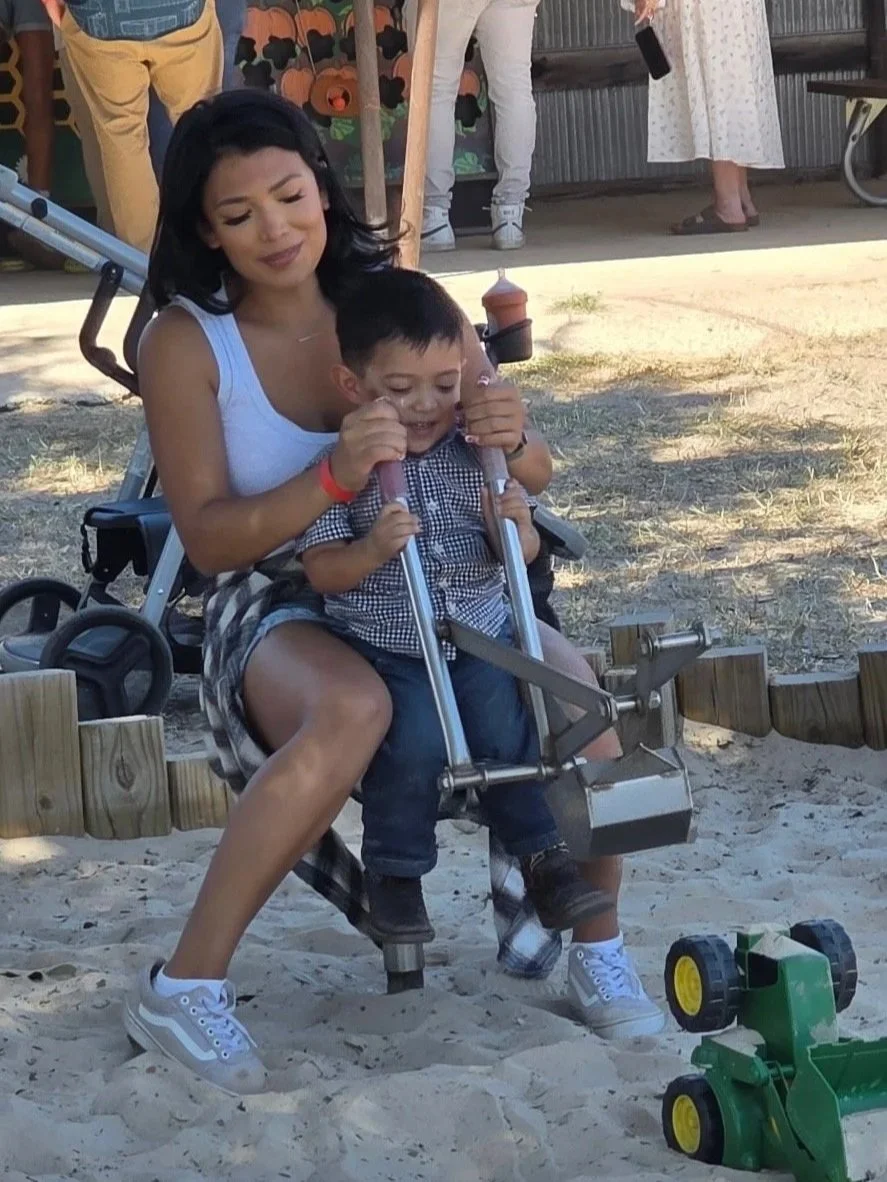
Lorena Salinas and her son Marcos
Salinas originally wanted to pursue a career in radiography, but due to a lack of finances and a support system, she had to put that dream on hold. When she discovered that AVANCE - San Antonio had a center on Palo Alto’s campus, it opened up new opportunities for her and her son.
She said that Marcos’s education at AVANCE-San Antonio goes beyond numbers and the alphabet. He is learning about self-regulation and emotional intelligence, skills that Salinas said she has taken out of the classroom and applied to everyday life, too.
Salinas is now enrolled in a nursing program at Palo Alto Community College and will graduate in 2028. She said her future looks drastically different now that she has gained a sense of self. She hopes to continue to pursue her education and a Bachelor of Science in Nursing.
“I feel like in becoming a parent and becoming what everybody else has needed for me, I kind of lost my sense of self,” she said. “Regaining my sense of self and financial freedom is a huge thing for me.”
Kids on Campus impact
When we invest in families and support their educational and workforce pathways, the opportunities are limitless. These student parents bring unique strengths to college campuses and value their roles as learners and caregivers. Families shouldn’t have to choose between getting an education and providing childcare. By providing Head Start-eligible children with free, safe, nurturing, developmentally rich learning environments on college campuses, we ensure that every child can thrive while their parents continue their education.
Engagement in a Head Start College partnership is a multi-step process, and our Kids on Campus team will walk you through, from the first conversation to launching a successful partnership. We will work with you to assess readiness, leadership buy-in, align strategically, and provide technical assistance to maintain successful collaboration. Interested in pursuing a Kids on Campus partnership? Learn how to engage here.